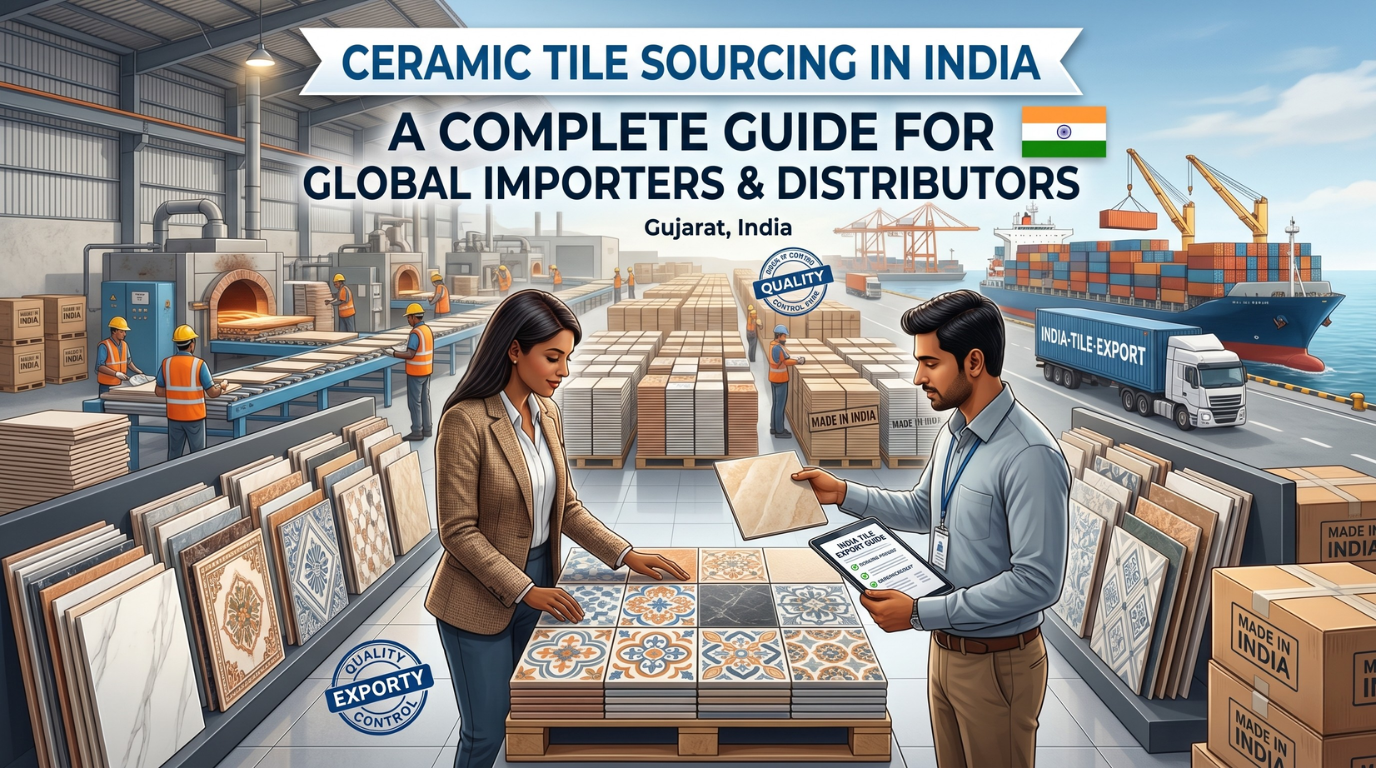
Ceramic tile sourcing in India has become a preferred choice for importers, distributors, retail chains, and construction companies worldwide. India has emerged as one of the largest producers and exporters of ceramic tiles, offering a wide product range, competitive pricing, and modern manufacturing capabilities. From residential projects to commercial developments, buyers across different markets rely on Indian suppliers for quality products and consistent supply.
Whether you are sourcing for a retail network or a large-scale construction project, understanding the Indian ceramic industry can help you make better purchasing decisions and build long-term partnerships.
Why Source Ceramic Tiles from India?
India has become a major player in the global tile industry due to several advantages.
Key Benefits
- Competitive manufacturing costs
- Wide variety of designs and finishes
- High production capacity
- Modern technology and automation
- Export experience across multiple countries
- Availability of OEM and private-label manufacturing
Many Indian ceramic tile manufacturers offer customized solutions for distributors and wholesalers seeking exclusive collections.
India vs Other Sourcing Destinations
| Factor | India | China | Europe |
|---|---|---|---|
| Cost Competitiveness | High | Medium | Low |
| Design Variety | High | High | Medium |
| OEM Capability | Strong | Strong | Limited |
| Production Capacity | High | High | Medium |
| Export Experience | Extensive | Extensive | Moderate |
| Lead Time | Competitive | Competitive | Longer |
Why Morbi Is the World's Ceramic Manufacturing Hub
The city of Morbi, Gujarat, has earned global recognition for ceramic manufacturing. Today, most ceramic tile manufacturers in Morbi operate advanced production facilities equipped with Italian machinery and digital printing technologies.
Why Morbi Leads the Industry
- Large cluster of manufacturing units
- Efficient supply chain ecosystem
- Easy access to ports
- Skilled workforce
- Strong export infrastructure
Morbi contributes significantly to India's ceramic production and serves customers in Asia, Africa, Europe, North America, and the Middle East.
Types of Ceramic Tiles Available
Global buyers can source different categories depending on project requirements.
Floor Tiles
Suitable for residential and commercial applications.
Wall Tiles
Available in various textures, colors, and finishes.
Porcelain Tiles
Known for low water absorption and high durability.
Double Charge Vitrified Tiles
Ideal for heavy-traffic areas.
Glazed Vitrified Tiles (GVT)
Popular for modern interiors and premium projects.
Full Body Tiles
Preferred for industrial and commercial spaces.
Product Comparison
| Tile Type | Durability | Water Absorption | Application |
|---|---|---|---|
| Ceramic Wall Tile | Medium | Higher | Bathrooms, Kitchens |
| Porcelain Tile | High | Low | Residential & Commercial |
| GVT Tile | High | Low | Luxury Interiors |
| Double Charge Tile | Very High | Low | High-Traffic Areas |
| Full Body Tile | Excellent | Very Low | Industrial Projects |
Understanding the Manufacturing Process
Leading ceramic tile exporters India follow a systematic production process.
Manufacturing Steps
- Raw material selection
- Mixing and grinding
- Spray drying
- Pressing
- Drying
- Glazing and digital printing
- Firing in kilns
- Quality inspection
- Packing and dispatch
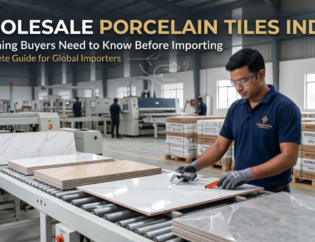
Modern plants use automation to ensure consistency and dimensional accuracy.
Quality Certifications and Standards
Quality assurance is essential in international trade.
Common certifications include:
- ISO 9001
- CE Certification
- EN Standards Compliance
- BIS Standards
- SGS Inspection Reports
- Third-party quality testing
Reliable ceramic tile supplier India companies provide test reports and certification documents to buyers upon request.
Factors Affecting Tile Pricing
Several elements influence pricing in ceramic tile wholesale India markets.
Major Factors
- Tile size
- Surface finish
- Thickness
- Raw material costs
- Packaging specifications
- Order quantity
- Custom branding requirements
- Freight rates
Higher volumes generally result in better pricing.
Shipping and Export Process
Efficient ceramic tile export from India requires proper planning.
Export Workflow
- Product selection
- Quotation approval
- Sample confirmation
- Production scheduling
- Quality inspection
- Packaging and palletization
- Container loading
- Documentation
- Shipment
Export Documents
- Commercial invoice
- Packing list
- Bill of lading
- Certificate of origin
- Insurance documents
- Inspection certificates
Packaging Standards for International Markets
Packaging plays a crucial role in reducing breakage during transit.
Standard Packaging Features
- Corrugated boxes
- Wooden pallets
- Plastic straps
- Shrink wrapping
- Export-grade labeling
- Barcode stickers
Many Indian ceramic tile manufacturers also provide customized packaging for private-label brands.
How to Evaluate Suppliers
Selecting the right partner is essential for long-term success.
Supplier Evaluation Checklist
 Manufacturing capability
Export experience
Product range
Certifications
Sample quality
Production lead time
Customer support
Packaging standards
References and testimonials
Working with an experienced tile sourcing company India can simplify supplier selection and reduce risks.
Common Sourcing Mistakes
First-time buyers often encounter avoidable issues.
Mistakes to Avoid
- Choosing suppliers based only on price
- Ignoring certifications
- Skipping sample approval
- Not verifying production capacity
- Overlooking packaging quality
- Failing to clarify payment terms
- Neglecting shipping timelines
Strong communication and proper documentation help prevent costly delays.
Tips for First-Time Importers
Start with Samples
Evaluate quality before placing container orders.
Understand Local Market Demand
Choose sizes and designs suitable for your region.
Verify Certifications
Ensure compliance with destination-country requirements.
Visit Manufacturing Facilities
Factory visits help establish trust and assess capabilities.
Work with Experienced Exporters
Established ceramic tile exporters India understand international logistics and documentation requirements.
Conclusion
India has established itself as a reliable destination for global tile procurement. With advanced manufacturing capabilities, competitive prices, and a broad product portfolio, ceramic tile sourcing in India offers significant advantages for importers, distributors, wholesalers, and construction companies. The strong ecosystem in Morbi, combined with experienced exporters and international quality standards, makes India an attractive long-term sourcing partner.
Request a Quotation
Looking for a dependable ceramic tile supplier India for your next project or distribution business?
Whether you need private-label solutions, container-load orders, or premium porcelain collections, our team can help you source high-quality products directly from leading Indian ceramic tile manufacturers.
Request a quotation today and discover reliable sourcing, competitive pricing, and worldwide shipping support tailored to your market requirements.
FAQs
1. Why is ceramic tile sourcing in India popular?
India offers competitive pricing, extensive product choices, modern manufacturing facilities, and strong export capabilities.
2. Which city is famous for ceramic tile manufacturing in India?
Morbi, Gujarat, is considered the leading ceramic manufacturing hub and houses numerous export-oriented factories.
3. What is the typical MOQ for bulk orders?
Most manufacturers accept orders starting from one container, although requirements vary.
4. Do Indian manufacturers provide OEM services?
Yes. Many suppliers offer private labeling, customized packaging, and exclusive product designs.
5. What certifications should buyers request?
ISO certification, CE compliance, SGS reports, and destination-specific standards are commonly requested.
6. How long does production usually take?
Lead times depend on order volume and product specifications but generally range from a few weeks to over a month.
7. Can suppliers mix sizes and designs in one container?
Yes. Many exporters provide mixed container loading options.
8. Which tile type is best for commercial projects?
Porcelain and double-charge vitrified tiles are widely preferred because of their durability.
9. What factors affect tile prices?
Size, finish, thickness, packaging, quantity, and freight costs all influence pricing.